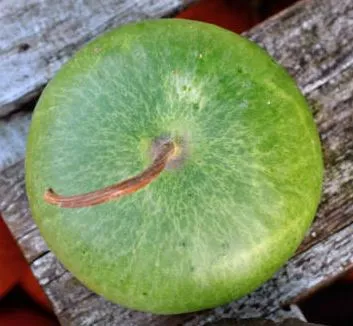
The Corsican gourd is a type of ornamental, hard-shelled gourd (Lagenaria siceraria) known for its unique, flat, "cheese wheel" shape, reaching 6-12 inches in diameter. After a long growing season and proper drying, the mature tan gourds become a versatile material for crafts, bowls, or decorative pieces, similar to wood.
The Corsican gourd is known by many other names, including Bottle Gourd, Calabash, Hard-Shelled Gourd, Corsican Flat Gourd, Canteen Gourd, Cheese Wheel Gourd, and Ornamental Gourd due to its distinctive shape and uses.
Broad Origin: The Corsican Flat Gourd is a specific variety native to the Old World tropics.
Asia and Africa: They have ancient origins in both Asia and Africa. While the general plant type has a broad origin, specific cultivars have more localized histories, such as one variety from Peru.
Seed Count: 10 seeds
Characteristics and Cultivation
- Shape: Round and flat, resembling a cheese wheel.
- Color: Green when growing, turning a tan color after drying.
- Growth Habit: Vining plants that require a lot of space and full sun.
- Growing Conditions: Best grown in warm conditions after the last frost, with a long growing season.
Harvesting and Curing
- Harvest the gourds when the stems and leaves have dried, indicating maturity.
- Allow the gourds to cure for several months in a dry, well-ventilated area, away from other gourds, until they are light and the seeds rattle inside.
Uses
Once dried, Corsican gourds can be used for:
- Decorative crafts: Painting, carving, or drilling them into bowls, lanterns, birdhouses, and more.
- Utensils and vessels: Historically used as containers, bowls, and other practical items.