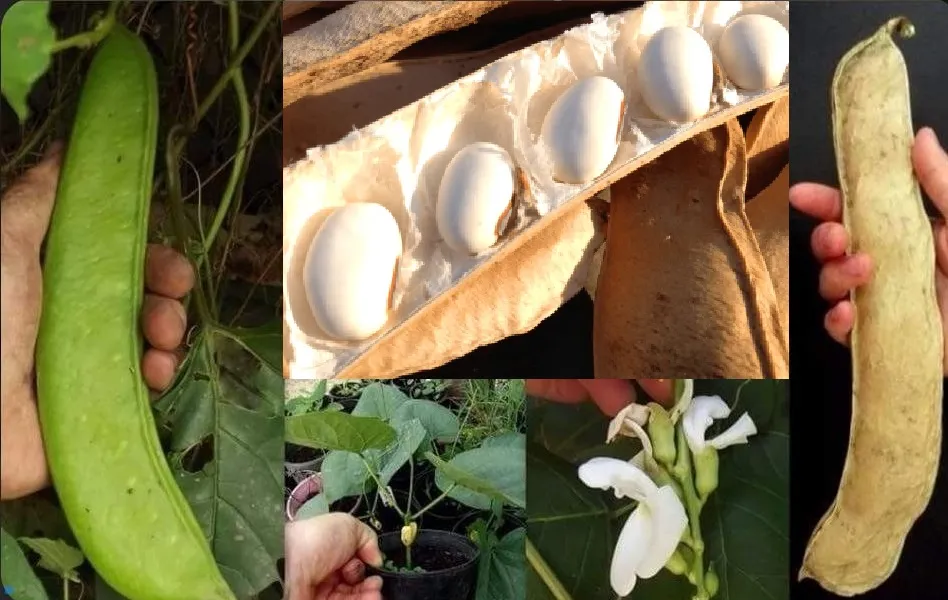
(Shironata Mame, White Flower Bean)
Sword beans are a climbing runner bean, herbaceous vine that can reach lengths of up to 30-35 feet under optimal conditions.
The flowers, which are either white or light purple, measure approximately 1" plus in length.
The fruits are shaped as long, straight, slightly compressed pods, measuring anywhere from 8-23 inches, with a rough surface. Each pod contains 8 to 16 seeds, which are oblong-ellipsoid, variable in color, ranging from red and red-brown to white or black. The hilum is dark brown and extends the full length of the seed.
It is believed to have come from the Old World, probably in eastern Asia. Still today, sword beans are widely distributed in those regions. Sword beans are most commonly cultivated in the south, southeast, and east Asia. It is also common in Saudi Arabia, East Africa, South Africa, and Madagascar. Historically, its primary use was for food and traditional Medicine. See extra notes at the bottom of this description for the medicinal content.
*A Great Pollinator plant*
Seed Count: 3 giant beans (others are selling by the gram, which means you may get only 1-4 beans, and for a higher price) One bean can weigh up to 3g. We assure you will get 3 beans no matter what the weight is, with each seed packet.
Maturity: 80-90 Days
Germination: 3-8 Days
Seeding Depth: 1 inches
Row Spacing: 12-14 inches
Plant Height: 12-30”
Growth Habit: Vining up to 30ft long.
Soil Preference: Fertile, well-draining soil.
Temperature Preference: 60-90℉
Light Preference: Full sun to part shade.
You do not need to soak before planting, but If you do choose to soak:
- Short soak time:
- If you decide to soak, only do so for a short period, like a few hours, to slightly speed up germination.
- Check for viability:
- Always check your seeds before planting by floating them in water; any that float are not viable and should be discarded.
Pests and Disease:
Shironata Sword Beans are not a favored by pests. There should not be any concerns with pests with proper cultivation practices.
Healthful Benefits: Unfortunately due to specific laws, we cannot list what we have found. But we can point you in the direction of the NIH gov website that has done studies on the bean extract and what it has helped in treating.