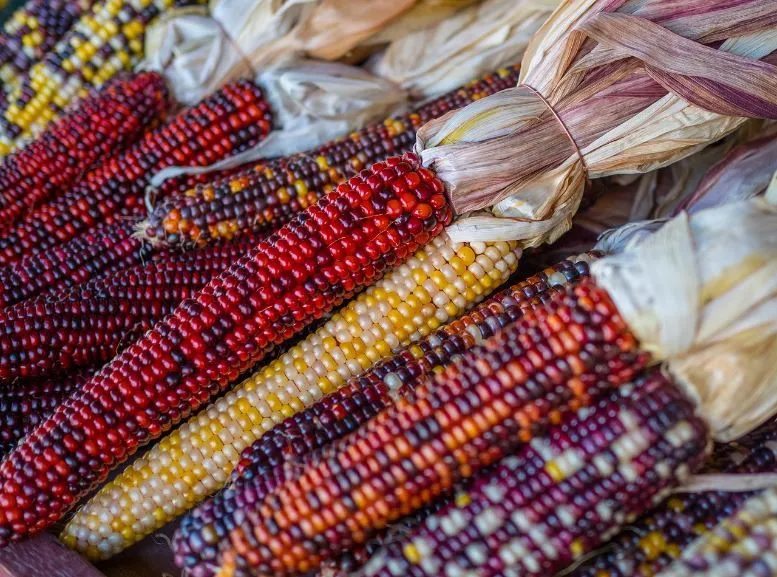
Organic Painted Hills Sweet Corn
Painted Hill corn is considered an heirloom variety because it was developed by crossing the heirloom sweet corn "Luther Hill" with the "Painted Mountain" flour corn, making it a hybrid with heirloom lineage; this means it is considered to be an heirloom variety itself.
For most people looking for a sweeter, more palatable corn, Painted Hill corn is generally considered better than Painted Mountain corn because Painted Hill is a sweet corn variety developed by crossing Painted Mountain (a flour corn) with a sweet corn variety, resulting in a more flavorful eating experience while still retaining the cold-tolerance of Painted Mountain.
Both have multicolored kernels, but Painted Hill often displays a wider range of colors.
Seed Count: 25 seed kernels
Open-pollinated: This means it can be saved and re-planted to maintain its genetic diversity.
Colorful kernels: Painted Hill corn is known for its vibrant, multi-colored kernels.
Appearance: Painted Hill corn has 7–8 inch ears that are mostly white with kernels in a variety of colors, including red, yellow, purple, blue, and sunset orange. The kernels are pale when fresh but intensify in color as the corn dries.
Harvest: Painted Hill corn is ready to harvest 70–95 days after planting. A good sign that it's ready is when the silks on top of the corn have died off.
Uses: Painted Hill corn can be eaten fresh or dried and used in soups and cornbread.
When to plant: Sow seeds 1–2 weeks after the last frost date, when the soil temperature is at least 60°F, but ideally 65–90°F. Plant in blocks or clumps to encourage pollination.
Seed Depth: 1-1.5" deep
Seed Spacing: 12" apart
Row Spacing: 24–36" apart
Thinning: When the seedlings are 4 inches tall, thin them to one plant every 12 inches.
Soil: Plant in well-drained, loamy soil with a pH of 6.0–6.8. You can improve the soil's water holding capacity by adding well-rotted manure compost or green manure crops.
Watering: Keep the soil moist, especially during the silking and tasseling stages.
Fertilizing: When the stalks reach knee height, you can apply a balanced fertilizer.
Pollination: Don't use sprinklers during the pollen shedding stage.